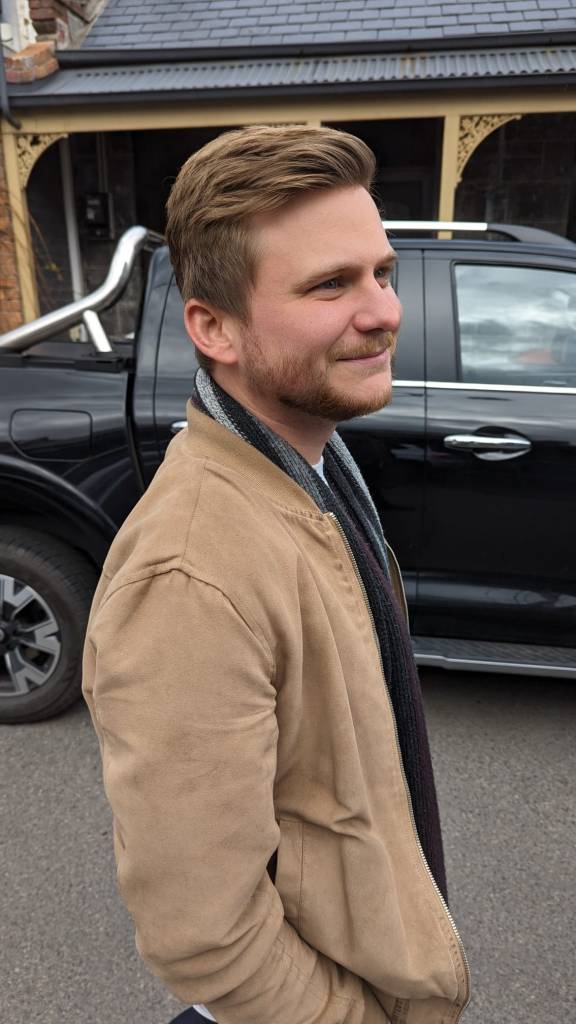
A short bio
People have described me as an interesting mix of someone who is both deep and reflective, and also joyous and energetic. I’ve come to embrace both sides of my personality and, as such, can be found doing karaoke, making dance videos, and making quick-witted jokes, yet also engaging in reflective conversations, sitting with people’s pain, and publicly teaching about faith and life.
My interest in the big questions started when I was a young boy, as I would ponder questions like, “What happens after you die?” or “If there is a God, what is God like?” However, such deep thinking was often overshadowed by a childhood that had baked into it an equally strong desire to have fun parties, be the prankster of the group, and be the leader in all things fun. Whilst I didn’t stop being fun, I did seek to become a more mindful and considerate person of joy as I grew older, something fostered through my newfound faith at 17. I had started attending a youth group and had an experience of God that brought my inquisitive mind face to face with an overwhelming sense of the Kingdom of God come in the flesh. The answers to my deepest questions were found in Jesus Christ.
In 2015, I graduated with an accredited counselling degree. During this degree, I learnt to weep with those who weep, to sit with both my own and others’ emotions, and to grow in my capacity for empathy. Around the same time, I became interested in exploring topics within the Christian faith itself and started to listen, read, and reflect very intentionally on a variety of theological and ethical topics. I also began preaching and teaching. Since then, I have spoken at a variety of churches and served as a licensed minister.
I now find myself as a loving husband, a son, a brother, an uncle, and a friend, as well as a counsellor and clinical supervisor working with at-risk youth, a podcaster, a public speaker, an infrequent blogger, and someone seeking ways to contribute to the common good. I am also studying a Master of Divinity.
How I describe my faith
There’s a saying, often attributed to Søren Kierkegaard, that goes, “Once you label me, you negate me.” In a similar vein, I don’t like using labels like “progressive” or “conservative” because a) those terms are more political than theological, and b) they are in constant flux from time to time, place to place, and topic to topic.
Instead, I simply say that I am a Christian, meaning that I am in communion with the Triune God, seek to believe what Jesus believed about Himself, God, the Kingdom of God, and where all things are headed, and, by God’s grace and the Spirit’s empowerment, practise the teachings of Jesus unto Kingdom come. I ask the question: “What would Jesus do, if He were me?” I seek to answer this by looking to Jesus and Holy Scripture (as interpreted through the lens of Jesus), drawing upon wisdom, the great Church tradition, my church community, and prayer, and attempting to work it all out in humility.
I adhere to the Nicene Creed, affirming it as the original writers intended, including the literal death, bodily resurrection, ascension, and return of Jesus to judge the living and the dead, and looking forward to the renewal of creation. Likewise, I adhere to historic Christian ethics as widely believed throughout the last 2,000 years, including (but not limited to) affirming the sanctity of human life from womb to tomb, caring for the poor and vulnerable, upholding marriage as the lifelong union of one man and one woman, affirming sexual intimacy as belonging within marriage, practising generosity, hospitality, simplicity, honesty, humility, forgiveness, and love of neighbour (including one’s enemies), and pursuing justice and seeking the common good in Jesus-shaped ways. Ultimately, I believe Christians are called to live lives marked by holiness, compassion, and faithfulness to Christ.
Zooming in a little closer, I would describe myself as a ‘Liturgicostal’, in that I seek to embrace both the riches of Spirit-led structures found in the Church’s historic liturgical and sacramental traditions, and the riches of Spirit-led spontaneity and mystical encounters with the Triune God experienced by Christians across the centuries, particularly within Pentecostalism. I see these not as competing traditions but as complementary expressions of Christian faith.
I have a particular soft spot for an existential approach to faith (i.e. faith as trust and relational knowing), a holistic approach to faith (i.e. Jesus is Lord of all things, not just the private or public world), and an enchanted and sacramental view of the world. In practice, I live out a blend of contemplative, liturgical, and charismatic spiritual practices, something also reflected in my local church community.

